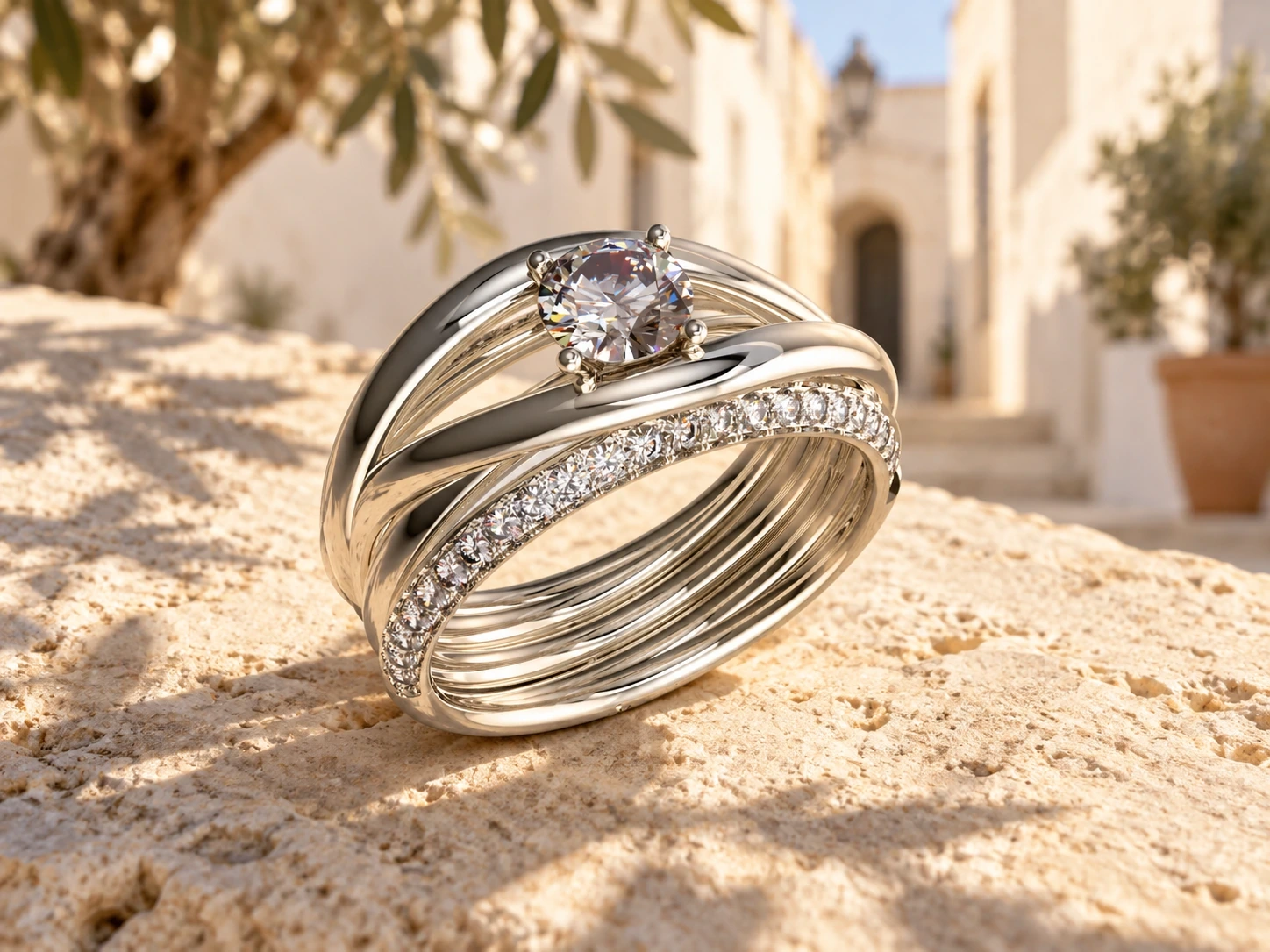
Gold colour changes a jewel’s presence. The same curve can appear bright and fresh in white gold, warm in yellow gold and softer in rose gold. Begin with the design that draws you in, then compare its three interpretations.
The same fineness: 18-carat gold.
18-carat gold, also called 750 gold, contains 75% pure gold. The other metals in the alloy contribute to its colour. Yellow, white and rose therefore do not describe three purity levels: at the same fineness, the proportion of pure gold is identical.
A colour to make your own.
Yellow gold evokes gold’s traditional colour. White gold gives the metal a paler appearance, while rose gold owes its colour to copper in the alloy. The final look also depends on the finish: a polished surface reflects light differently from a matt or brushed one.
Look at the jewellery you already wear, your watch, a gemstone’s colour and the combinations you enjoy. There is no rule that everything must match. A jewel can continue a familiar style or introduce a new shade.
Compare the same design.
The Maison’s product pages show each design in three gold colours within the same setting. With Paloma, for example, the interwoven bands remain at the centre of the composition: the metal’s colour changes how we see their curves.
These views help you compare the intended colours. Lighting and your screen affect their appearance; the shade and finish of the piece will be discussed with the Maison.
Before you make your choice.
Confirm the colour, size and price of your chosen variant together. Where a version is marked ‘On request’, its price is still to be confirmed. For a personal project, this conversation can also become the starting point for a bespoke creation with Pascal.
Information on alloys: GIA’s guide to white, yellow and rose gold.
All articles