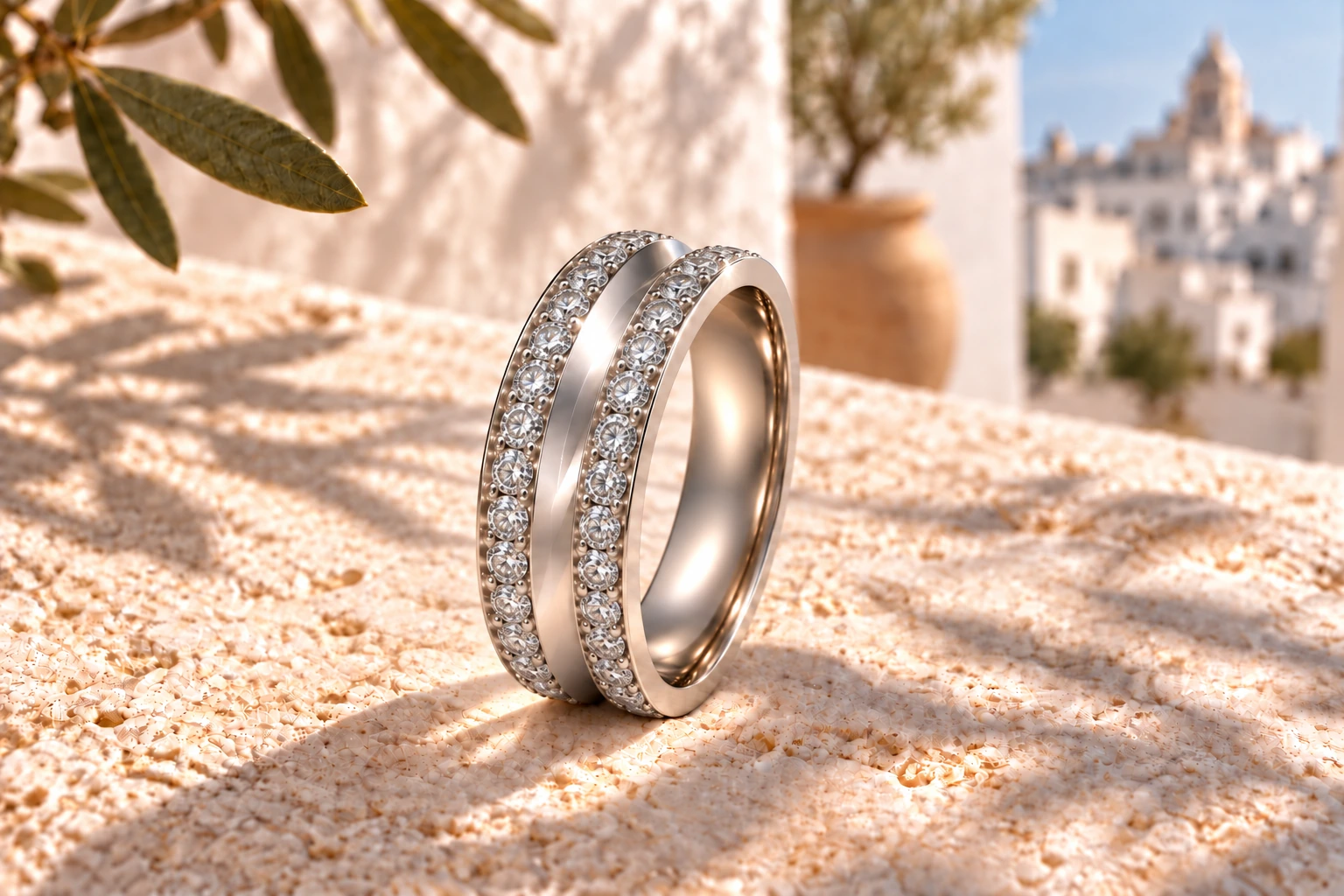
A gold band highlights its volume and finishes. Diamonds add a rhythm of light and raise questions about setting, origin and care. Compare these options using the current models.
The shape of gold and the rhythm of stones
Diabolo without diamonds reveals its curves and contrasting finishes. Stradina and Strada create one, two or three rows depending on the model; Diabolo 6 mm pavé gives the stones another presence. Observe their proportions and how they sit alongside your other rings.
Natural or laboratory-grown: a separate specification
A laboratory-grown diamond and a natural diamond have essentially the same chemical and physical properties, with different origins. The Maison presents two separate Diabolo pavé references to make this choice explicit. For other models, request information specific to the reference. Colour and clarity grades alone do not establish origin.
Read the stone count and total carat weight
The total carat weight of a group of small diamonds describes the whole group. It is not the weight of a single stone. Stone count may vary with ring size. Compare the variant that suits you and clarify any missing information before purchasing.
Plan for everyday care
Store pieces separately and remove them during activities exposing your hands to impacts or abrasive products. For a diamond-set ring, request suitable cleaning advice and an inspection after an impact. Ultrasonic cleaning requires particular care depending on stone treatments and the condition of the setting: ask a professional.
GIA: natural and laboratory-grown diamonds GIA: diamond care
Explore the wedding rings Discuss our wedding with Pascal The Maison’s journal